
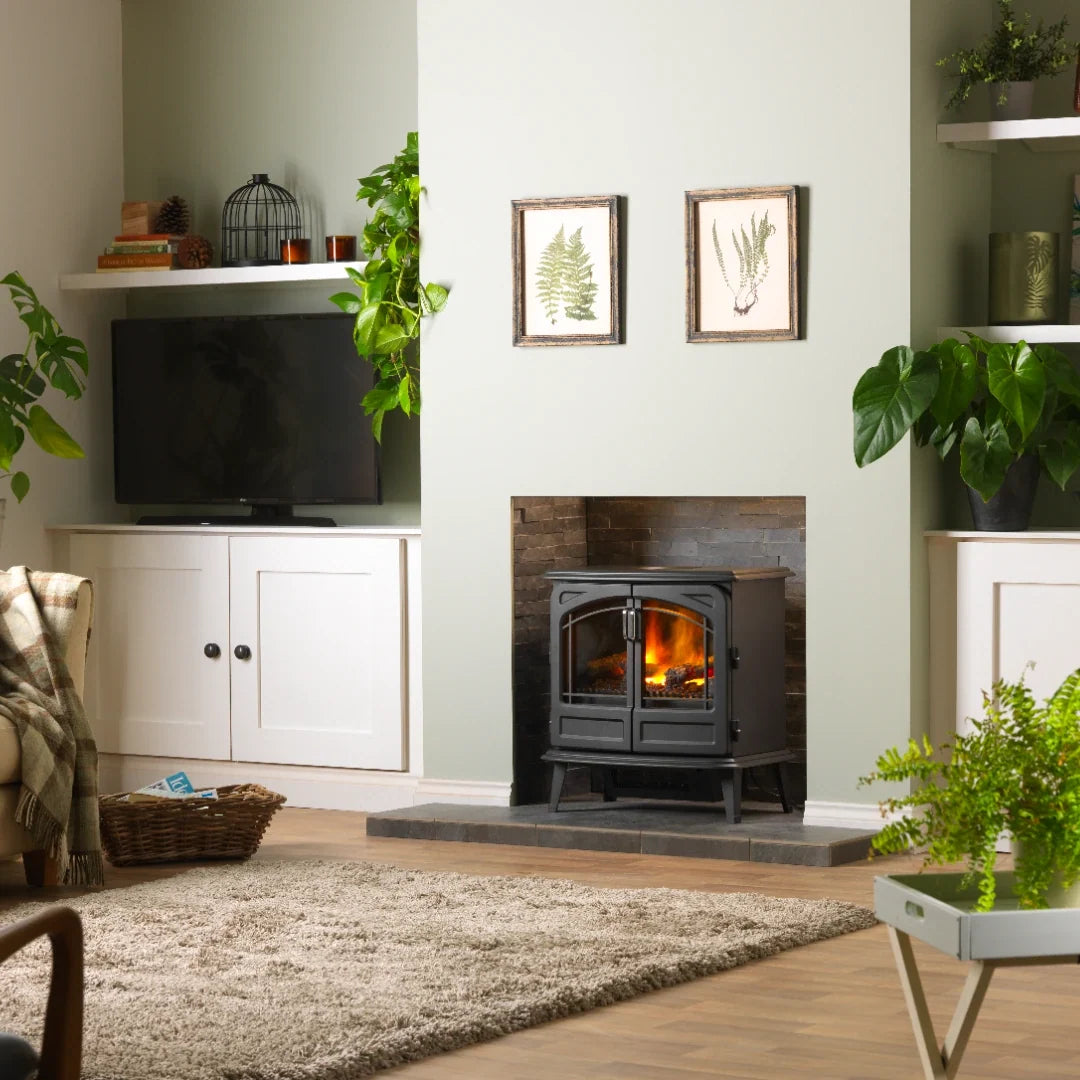
Electric fires create realistic flames in three main ways: water mist lit from below for flames with real depth, LED projection for a bright, low-maintenance flicker, and moulded 3D log beds that give both a convincing focal point. Dimplex calls its water-vapour effect Optimyst and its LED effect Optiflame, and the log bed works alongside either. Here's how each realistic flame effect works and which suits your room.
Water mist flames: how Optimyst works
Water mist is the effect that makes people do a double take. In simple terms, the stove turns water from a small internal tank into a fine, cool vapour, and LED lights shine up through it. The result is "flames" and "smoke" that rise and drift above the fuel bed in three dimensions.
Because the flames are made of vapour, not a projected image, they look convincing from different angles and have that soft, irregular movement of a real fire. Dimplex describes the result as realistic and smoke-free.
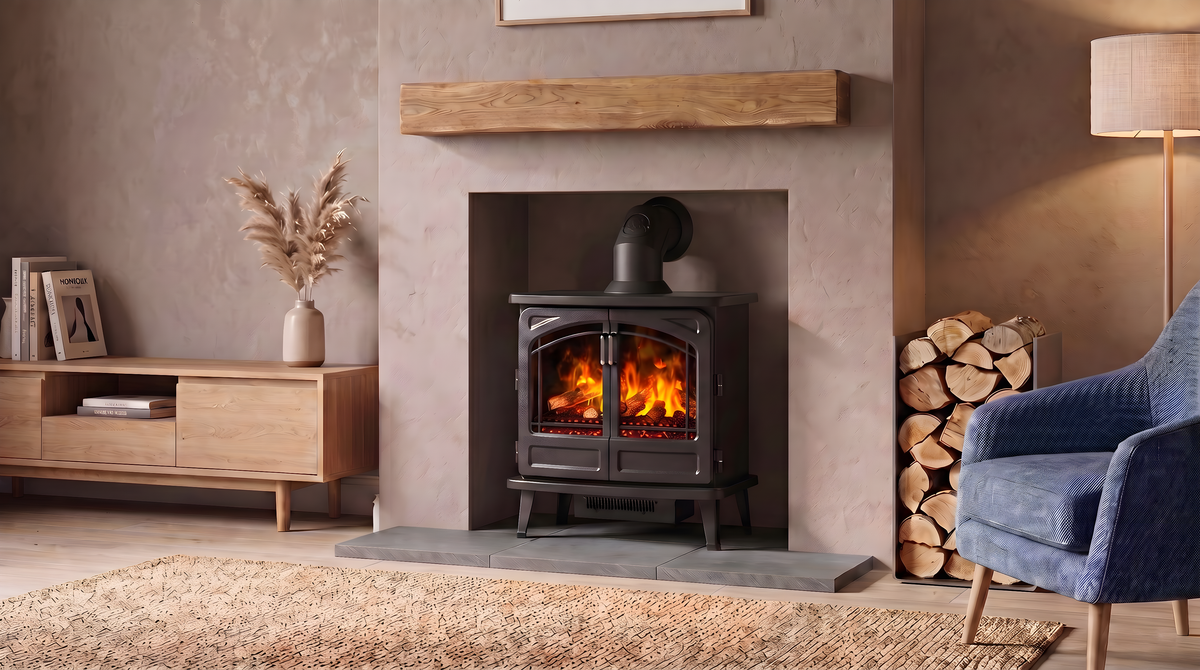
Dimplex Optimyst stoves include the classic Dimplex Optimyst Stove, the Smithfield Optimyst Electric Stove and Bermondsey Optimyst Electric Stove, which both add LED-enhanced flames for extra depth, and the Evandale Optimyst Electric Stove - Pebble in a soft neutral finish for Scandi-style rooms. Each one offers:
- Two heat settings, 1kW and 2kW
- A flame effect you can run all year without any heat
- A water tank you refill through the opening front door
- Freestanding installation with a standard UK plug
The trade-off is a little upkeep. You'll need to top up the tank, and the manual will tell you what type of water to use and how to keep the system clean. Follow it, and the effect stays at its best.
LED flames: how Optiflame works
LED flame effects are the most common type of electric fire. Optiflame uses LED lighting to create a flickering flame picture behind or above the fuel bed. There's no water, no tank and almost no maintenance, which makes it ideal if you want to flick a switch and forget about it.
More advanced models let you control how the flames look:
- Flame speed. The Oakridge stove and Sense 50 Optiflame Media Wall Fire both have 3 flame speeds, from a lazy glow to a lively blaze.
- Flame colour and mood lighting. The Sense 50 offers 13 flame colours and 7 ambient themes, controlled by remote, manual buttons or an app.
- Sound. The Sierra 48 Optiflame Wall Mounted Electric Fire adds the gentle crackle of a real wood fire, with app control through the Tuya Smart App.
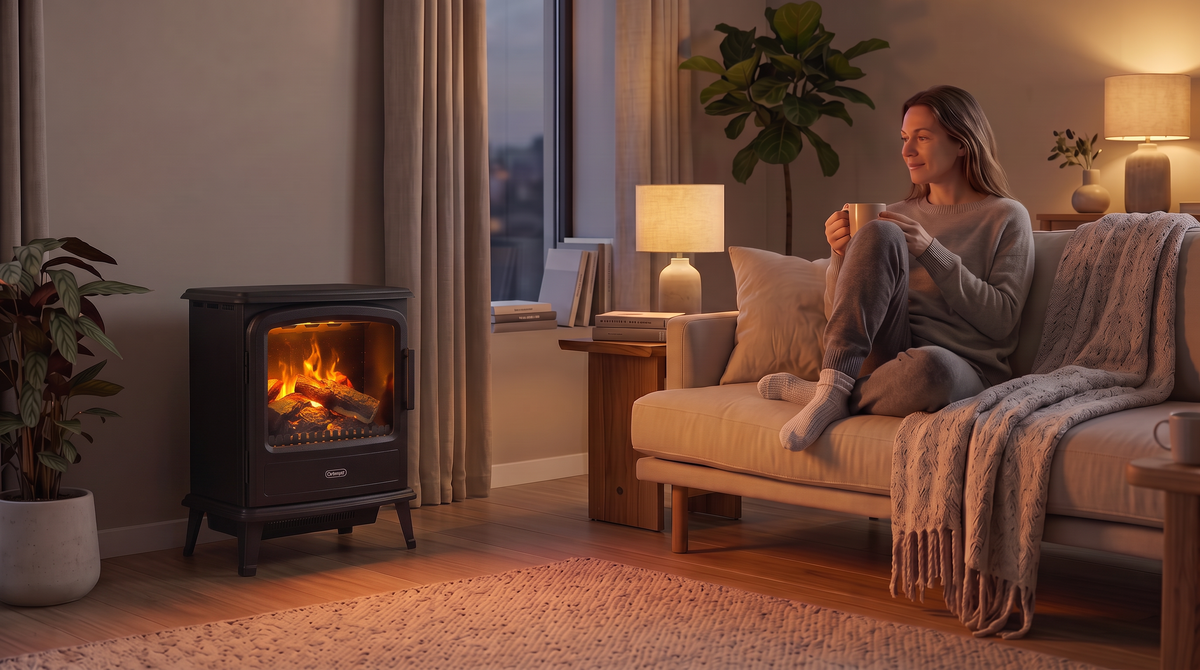
LED flames tend to be brighter and crisper than mist flames, so they suit modern media walls and rooms with a lot of daylight. Traditional stoves such as the Club Optiflame Electric Stove use the same technology in a classic black freestanding body with 1kW and 2kW heat settings.
3D logs and fuel beds: the finishing touch
Whatever creates the flames, the fuel bed is what sells the illusion. A moulded log set, lit from beneath and around, gives the fire a solid, three-dimensional base that looks right even when you glance at it from across the room. The glow appears to come from inside the logs, just like embers.
Some examples from the range:
- The Oakridge pairs an Optiflame flame with a log-bed effect, viewable from three sides for a wide, uninterrupted glow.
- The Sense 50 lets you choose between log and tumbled glass fuel beds, so you can go rustic or contemporary.
- The traditional Dimplex Yeominster Freestanding Electric Fire combines a flickering log effect with 1.2kW of radiant heat, like a classic single-bar fire.
Which flame effect is right for you?
| Effect | Best for | Trade-offs |
|---|---|---|
| Water mist (Optimyst) | The most lifelike 3D flames, traditional stove looks | Tank to refill, a little routine cleaning |
| LED (Optiflame) | Low maintenance, bright rooms, colour and speed options | Less three-dimensional than mist |
| 3D log bed | Adding depth and a convincing ember glow | Works with a flame effect, not on its own |
If you want a humidifier as well, the Optimyst 3-in-1 Heater combines the mist flame effect with heating and humidifying. Its 1.4 litre tank gives up to 4 hours of humidifying mist, handy in rooms where central heating dries the air.
Running costs: flames vs heat
The flame effect alone uses far less power than the heater; check each manual for the exact figure. The heat is where the cost lies. On a 2kW stove at full power, at the Ofgem cap for October to December 2026: 2kW × 1 hour × 26.32p = 52.6p an hour. Drop to the 1kW setting and it halves to 26.3p. The rate changes quarterly.
Choosing your flame
For the most realistic flame effect, water mist wins. For convenience, colour options and modern media walls, LED is hard to beat. And a good 3D log bed improves either. Compare Optimyst and Optiflame stoves and fires side by side at shopdimplex.com, with free delivery to the UK mainland.

Leave a comment
This site is protected by hCaptcha and the hCaptcha Privacy Policy and Terms of Service apply.