

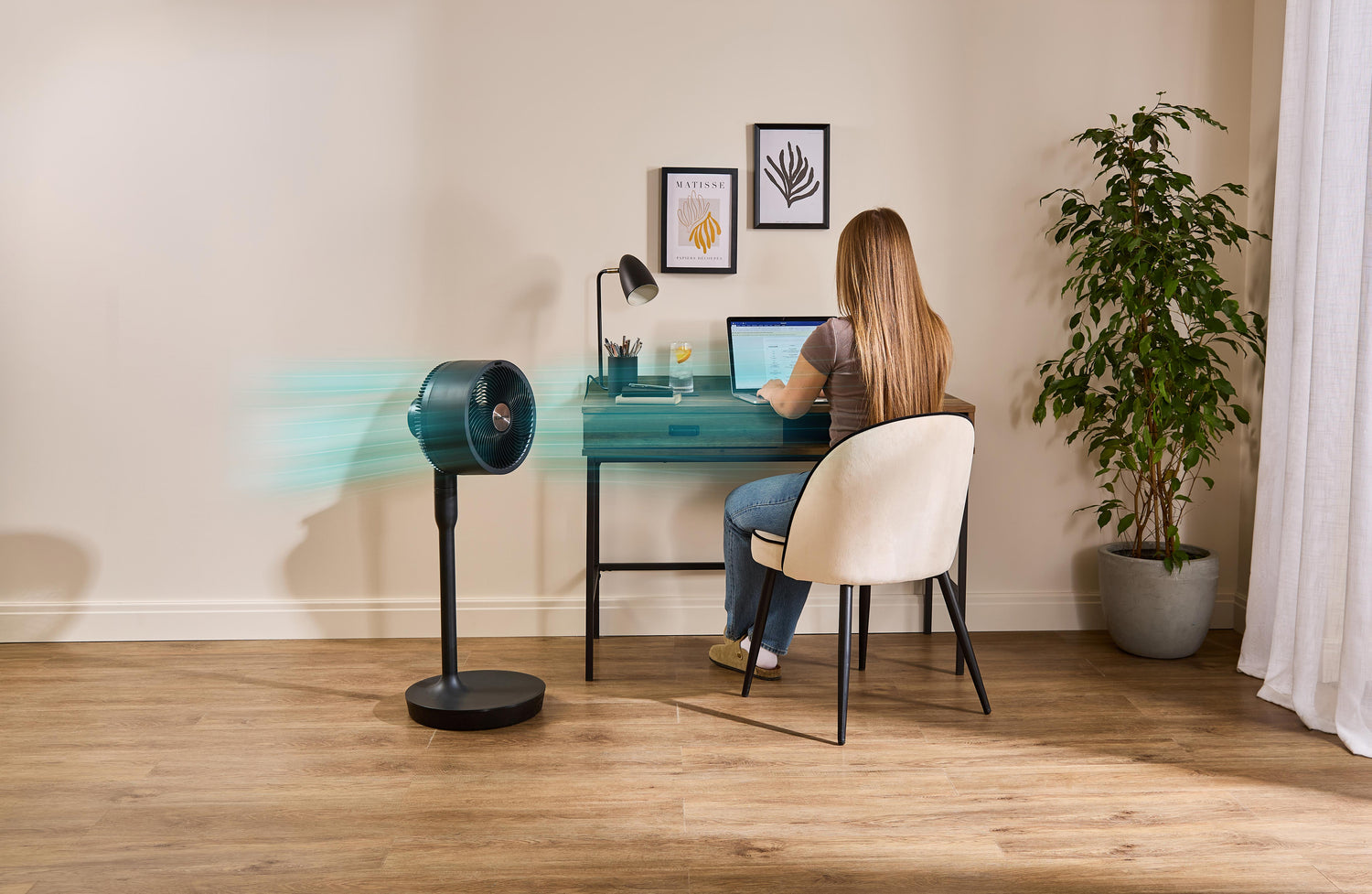
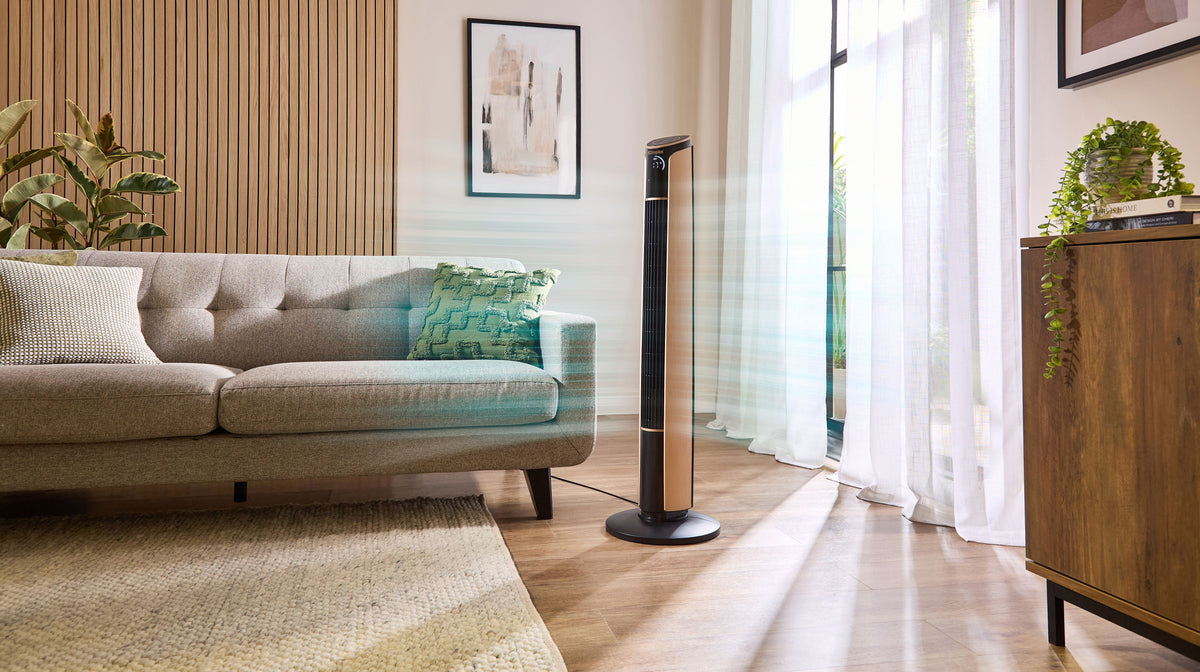
Buying a good fan is only half the job. Where you place it — and how you angle it — has a surprisingly large effect on how well it cools a room. Get the positioning right and your fan can feel twice as effective. Here's what actually works.
Understand what a fan actually does
Before we get into positioning, it helps to understand what a fan is really doing. A fan doesn't cool air — it moves air. The cooling effect comes from wind chill: moving air accelerates the evaporation of moisture from your skin, which draws heat away from your body. This means positioning a fan to maximise airflow across people in the room will always be more effective than simply running it in the middle of the space.
The cross-ventilation method: the most effective technique
If you have windows on opposite sides of a room or building, cross-ventilation is the most powerful cooling method available without an air conditioner. Place one fan in or near a window facing inward to draw in cooler air from outside. Place a second fan on the opposite side of the room facing outward to push warm air out. This creates a continuous flow of fresh air through the entire space.
This works best in the evening when outdoor temperatures have dropped below the indoor temperature — typically after 8–9pm in summer.
How to cool a room with a single fan
If you only have one fan, placement still matters a great deal:
Face it inward from a window: Position the fan in front of an open window, blowing into the room. This draws in outside air, which is often cooler than the stale air inside.
Elevate it: Warm air rises. A fan placed on a raised surface, such as a table or shelf, will circulate air more effectively than one on the floor.
Angle it slightly upward: Angling the airflow upward helps move hot air that has accumulated near the ceiling down into the living space.
Use oscillation: If your fan has an oscillating function, use it. A fan blowing in one direction only cools a narrow corridor of space.
The ice trick: does it work?
Placing a bowl of ice or a frozen water bottle in front of a fan is a genuine technique. It works on the same principle as evaporative cooling — as the ice melts, it cools the surrounding air, and the fan blows that cooler air across the room. It's not a substitute for air conditioning, but on a particularly hot day it can lower the perceived temperature by a few degrees.
What to avoid
Don't face a fan at a hot exterior wall: In direct sunlight, walls can radiate heat. A fan blowing air off a hot wall will push warm air around the room rather than cooling it.
Don't block airflow: A fan placed directly behind furniture or in a corner has its intake restricted. Always leave at least 30cm of clear space behind and below the fan.
Don't run a fan in a closed room during the day: If the outside temperature is higher than the inside temperature, opening windows will push warm air in. Keep windows closed and blinds down during the hottest part of the day, and only open up once the evening cools.
Night-time cooling
The best time to ventilate is after sunset. Open windows at opposite ends of the room and run a fan to pull the cool night air through. This can drop indoor temperatures by several degrees overnight, so your bedroom stays comfortable without the fan needing to run at full power.
Get more from your fan with Dimplex
A Dimplex fan with a wide oscillation range and adjustable tilt gives you the flexibility to position airflow exactly where you need it. Browse the full range at shopdimplex.com.
Shop fans at shopdimplex.com

Leave a comment
This site is protected by hCaptcha and the hCaptcha Privacy Policy and Terms of Service apply.