

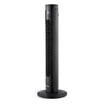
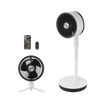
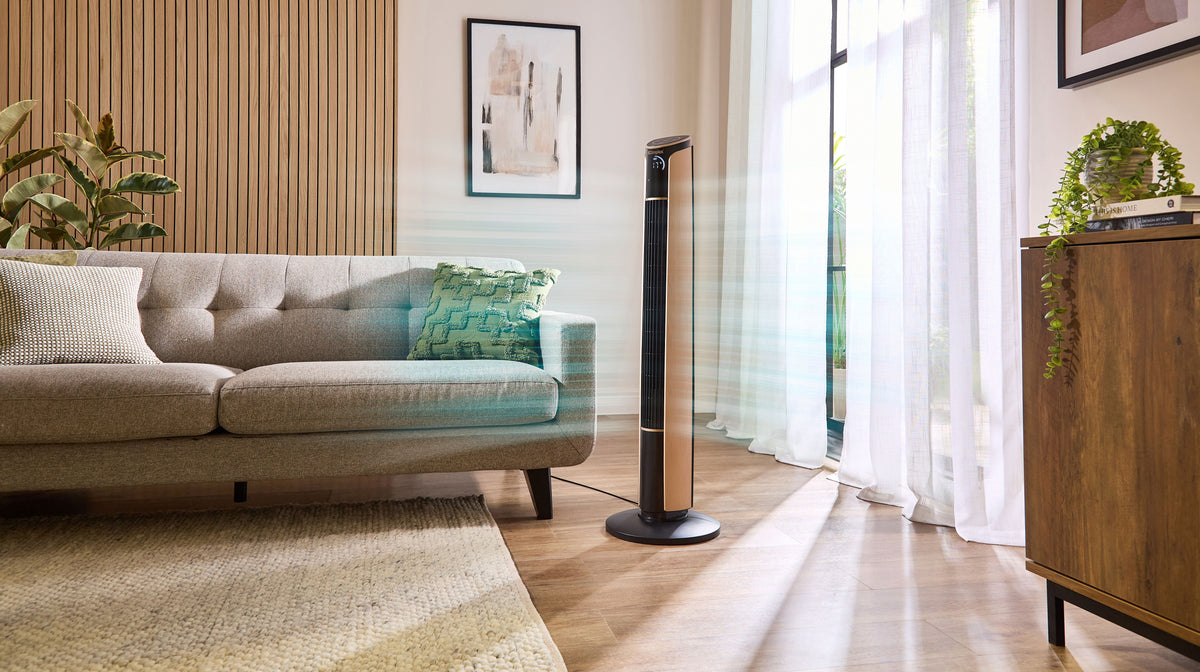
Combination units that promise to cool your room and clean the air at the same time have become increasingly popular. But does combining these two functions into one device actually work — or is it a case of doing two jobs adequately instead of one job well? Here's an honest assessment.
How do tower fans with air purifiers work?
These combination units use the same airflow mechanism as a standard tower fan, but the air passes through one or more filtration layers before being projected into the room. The most common filter types are:
-
HEPA filters: High Efficiency Particulate Air filters capture particles as small as 0.3 microns — including dust, pollen, pet dander, and some bacteria. A true HEPA filter removes 99.97% of particles at that size.
-
Activated carbon filters: These absorb gases and odours, including cooking smells, VOCs (volatile organic compounds) from paints and cleaning products, and smoke.
-
Pre-filters: A coarser first layer that captures larger particles like hair and visible dust, extending the life of the main filter.
Do they actually purify the air?
Yes — but with some important caveats. A tower fan with a genuine HEPA filter will measurably reduce airborne particles in a room over time. Independent testing has shown that quality combination units can significantly reduce particle counts in moderately sized rooms up to around 30–40 square metres within an hour of continuous operation.
The key word is 'continuous'. Air purification works by cycling the room's air through the filter repeatedly. The more times per hour the unit processes the room's air volume measured as CADR — Clean Air Delivery Rate, the more effective the purification. A combination unit with a lower CADR than a standalone air purifier will take longer to clean the same volume of air.
Are combination units as effective as dedicated air purifiers?
For most everyday use — reducing dust, pollen, and general indoor air quality — a quality combination unit performs well. Where they may fall short compared to a dedicated air purifier is in rooms with high pollution loads, such as homes with heavy smokers, severe allergy sufferers, or spaces near busy roads.
Dedicated air purifiers are designed purely around filtration efficiency and CADR rating, with no trade-offs for fan performance. Combination units balance both functions. In practice, for the majority of UK homes, a combination unit is a practical and cost-effective choice.
What to look for when buying
-
True HEPA certification: Look for 'True HEPA' or 'H13 HEPA' — not 'HEPA-type' or 'HEPA-like', which are not subject to the same standards.
-
CADR rating: The Clean Air Delivery Rate tells you how much filtered air the unit produces per hour. A higher CADR means faster, more effective purification.
-
Room size rating: Most manufacturers publish the maximum room size the unit is designed for. Don't use a unit designed for a 20m² room in a 40m² space.
-
Filter replacement cost: HEPA filters need replacing every 6–12 months depending on use. Factor this into the total cost of ownership.
-
Noise level: Purification requires the fan to run continuously. Check the noise level at the speed you'd realistically use it day-to-day.
Who benefits most from a combination unit?
-
Allergy and hay fever sufferers: Reducing airborne pollen and dust can make a meaningful difference to daily comfort, especially during peak season.
-
Pet owners: Pet dander is one of the most common indoor allergens — HEPA filtration significantly reduces its concentration.
-
Homes in urban areas: Traffic pollution and particulates can enter through open windows. A combination unit that filters while cooling makes good sense in city environments.
-
Anyone who wants simplicity: One unit instead of two means less clutter, one power socket, and one maintenance schedule.
The verdict
Tower fans with air purifiers do work, and for most households they represent a sensible all-in-one solution. The key is to choose a unit with genuine HEPA filtration, an appropriate CADR for your room size, and a filter replacement programme that's practical to maintain. For users with severe respiratory conditions or very high indoor pollution levels, a dedicated air purifier alongside a separate fan may still be the better choice.
Explore fan options at Dimplex
At Dimplex, we offer a range of tower fans and home comfort products designed for modern living. Visit shopdimplex.com to find the right solution for your home.
Shop tower fans at shopdimplex.com

Leave a comment
This site is protected by hCaptcha and the hCaptcha Privacy Policy and Terms of Service apply.